What Is a Control System?
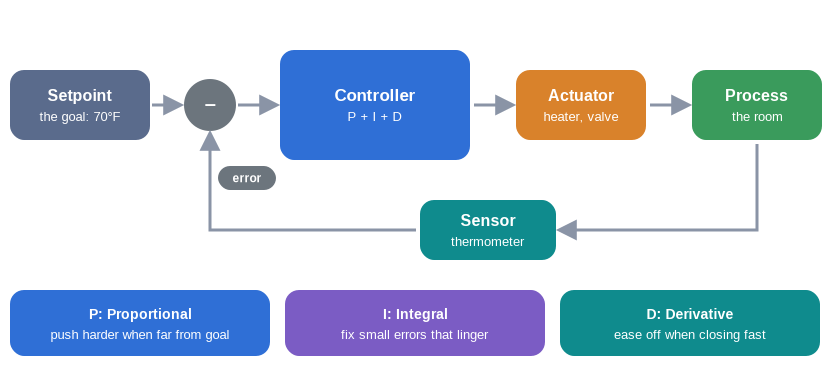
A control system keeps something at a goal, called the setpoint, even when the world pushes it away. A thermostat holding 70°F, cruise control holding 65 mph, and a refinery holding a pipe's pressure all work the same way: measure, compare with the goal, and adjust.
The most common controller in industry is the PID controller. It decides how hard to push based on three things: how far off it is now, how long it has been off, and how fast it is changing.
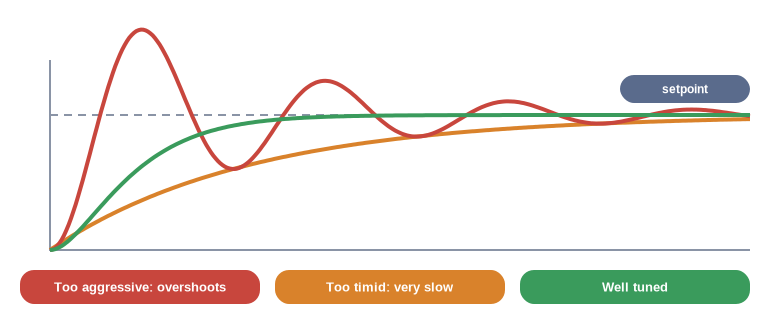
Tuning: not too hard, not too soft
The same controller can behave very differently depending on its settings. Choosing them is called tuning.
Industrial Control in the News
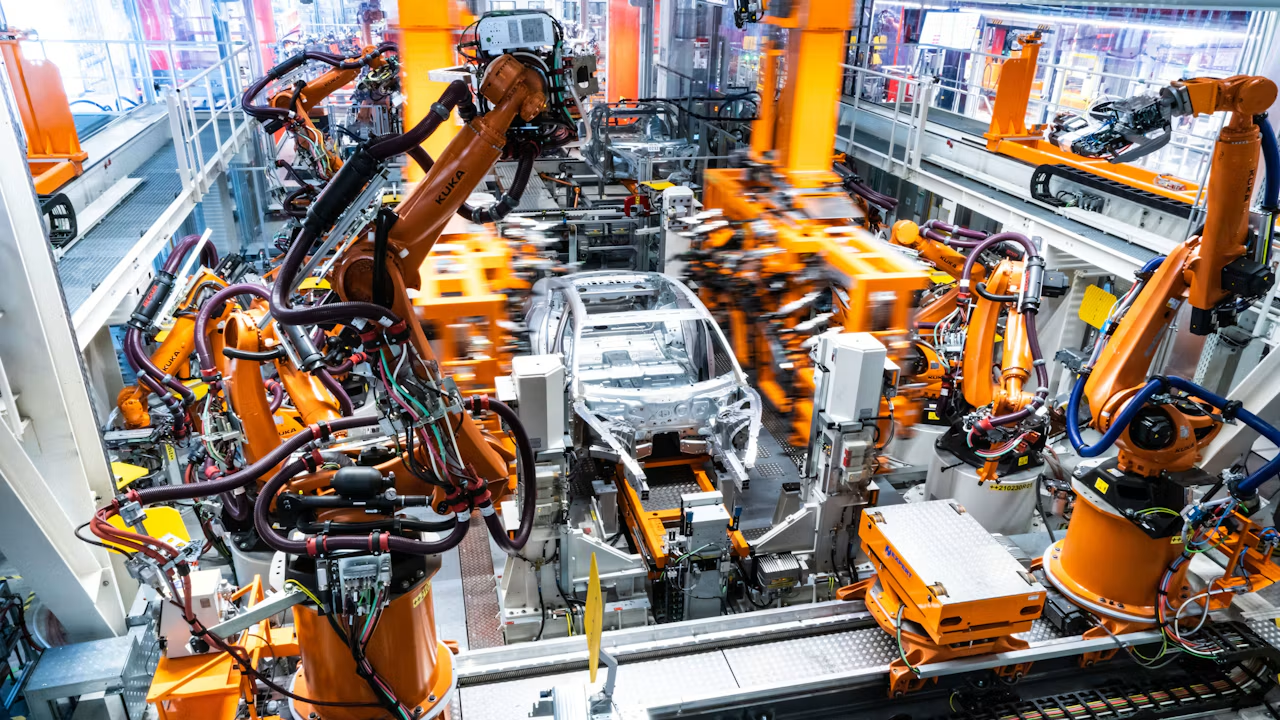
Factory controllers become software
Audi now runs part of its car-body production with virtual PLCs: controller software running on data-center servers instead of many separate hardware boxes on the factory floor.
Siemens, 2025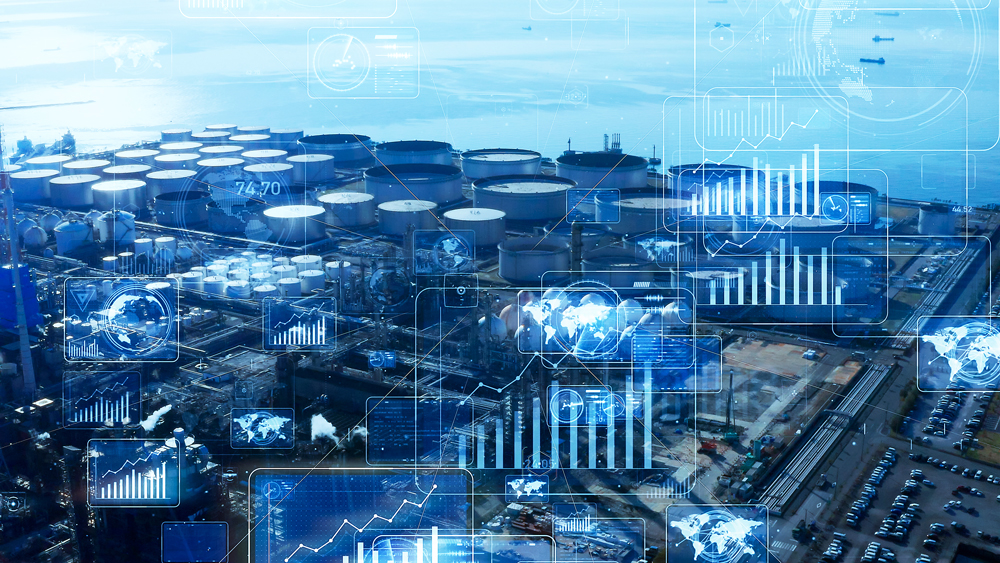
AI agents running a gas plant
Yokogawa trained AI control agents in a plant simulator, then deployed them at an Aramco gas plant in Saudi Arabia. Early results showed 10 to 15 percent less chemical and steam use.
Yokogawa, 2025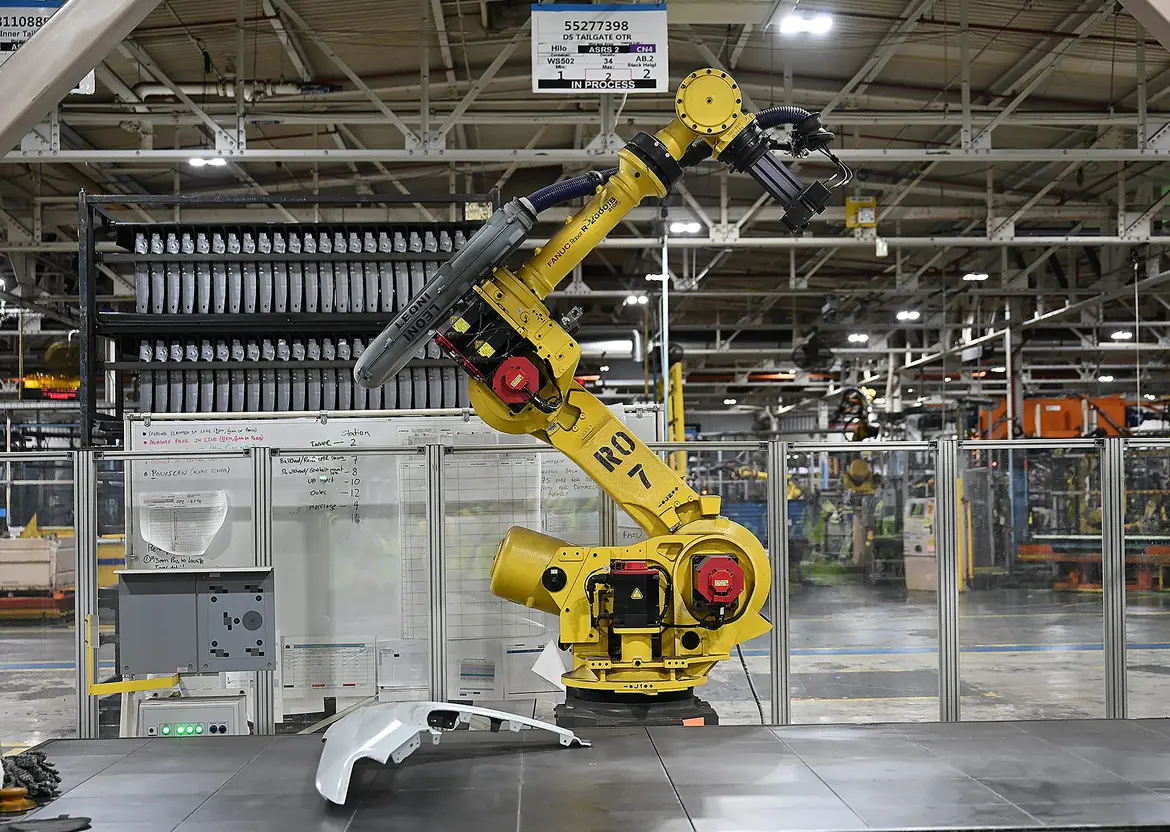
Toward "dark" factories
Automakers are adding AI and robots, and some imagine factories that run with the lights off. Workers and unions are pushing back, and most companies still pair people with machines.
The Detroit News, September 2026PLCs: The Workhorses of the Factory
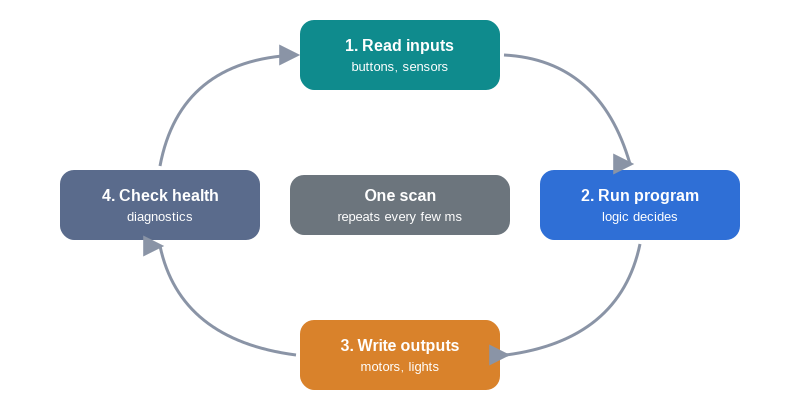
A programmable logic controller (PLC) is a rugged computer built to control machines. It survives heat, dust, and vibration, and it runs the same program over and over in a fixed, predictable cycle called a scan.
Ladder logic
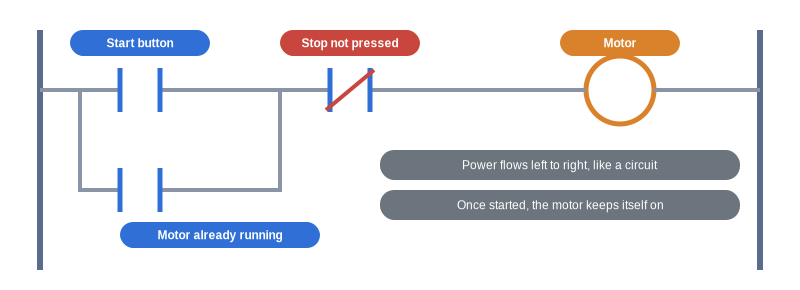
PLCs are often programmed in ladder logic, a visual language that looks like the electrical relay diagrams electricians used before computers. It is one of five standard PLC languages defined in IEC 61131-3.
How a Plant Is Organized
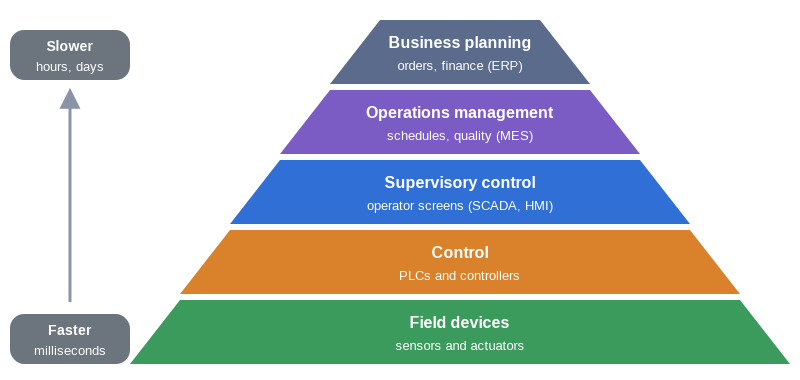
Industrial systems are layered. Fast, simple control happens near the machines; slower planning happens higher up. Process plants such as refineries often use a distributed control system (DCS) instead of separate PLCs for the control layer.
SCADA: Control Across Miles
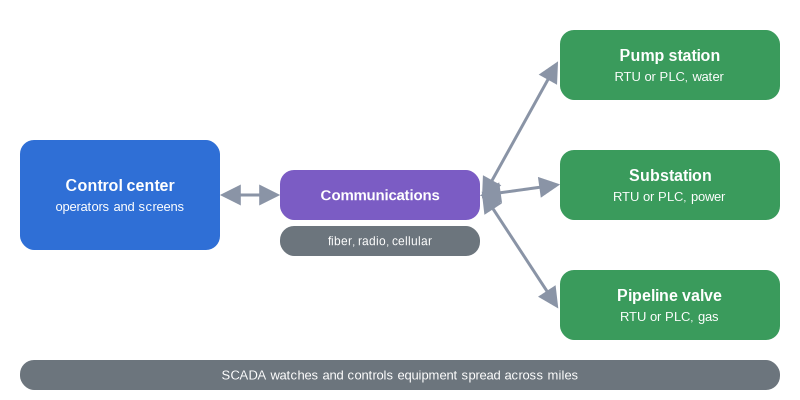
SCADA (supervisory control and data acquisition) lets a few operators watch and control equipment spread across a city or a country. Small field computers called remote terminal units (RTUs) sit at each site and report back over radio, cellular, or fiber.
Where Industrial Control Is Heading
Software-defined control
Controllers are moving from dedicated boxes to software on shared servers, as at Audi, making factories easier to update and reconfigure.
IT and OT merging
Factory networks, or operational technology (OT), are increasingly connected to business IT and the cloud. That brings better data, but also new security risks.
AI in the loop
AI agents trained in simulators now help optimize processes alongside traditional controllers, as at the Aramco gas plant.
Digital twins
Virtual copies of plants let engineers test control changes before trying them for real. See System Design and Modeling.
Try It Yourself
PID Tuning Simulator
Move the P, I, and D sliders and watch the response change live in your browser.
timbrica.comPLC Fiddle
Write and run ladder logic in your browser, and build the start/stop circuit yourself.
plcfiddle.comOpenPLC
A free, open-source PLC you can program in standard IEC 61131-3 languages and run on your own computer.
autonomylogic.comFactory I/O
A 3D virtual factory with conveyors and sorters to control with real or simulated PLCs. 30-day free trial (Windows).
factoryio.comPython Control Systems Library
For programmers: model, simulate, and tune feedback controllers in Python.
python-control