How a Self-Driving Car Works
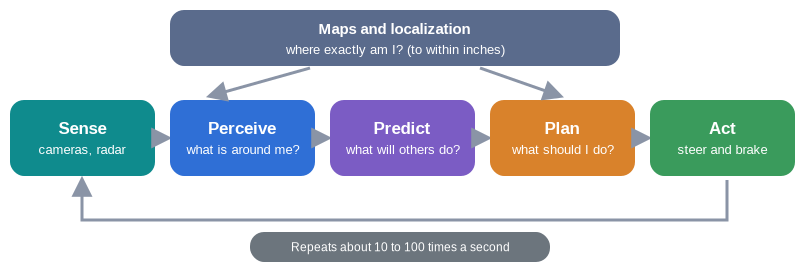
A self-driving car runs the same sense, decide, act loop as every cyber-physical system, just very fast and with very high stakes. It must work out where it is, what is around it, what everyone else is about to do, and what it should do next, many times every second.
Autonomy in the News
Driverless 18-wheelers
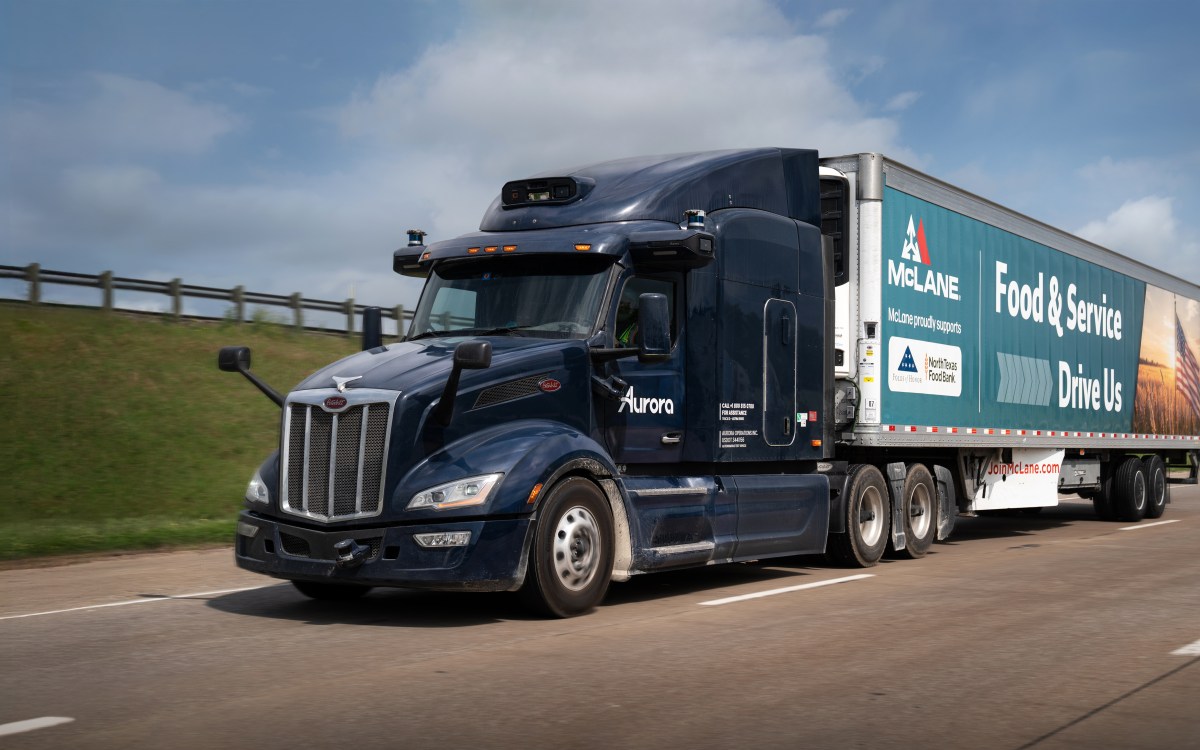
Aurora's self-driving trucks now haul goods between Dallas and Houston with no one driving. Human drivers take over for local deliveries at terminals near the highway.
TechCrunch, May 2026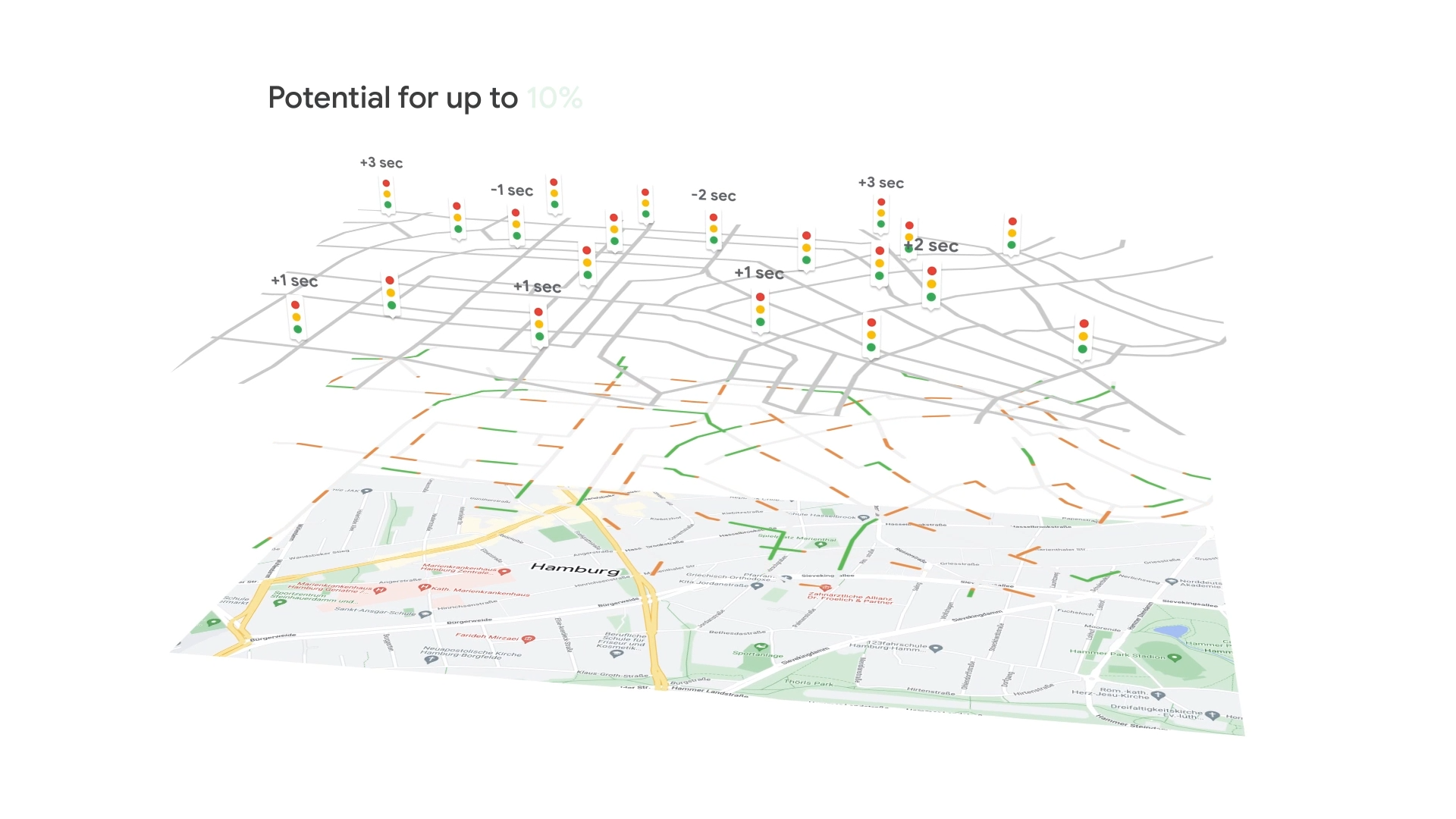
Smarter traffic lights
Google's Green Light uses AI and driving trends to suggest better traffic-light timing. It is in more than 100 cities, with early estimates of up to 30 percent fewer stops.
Google Research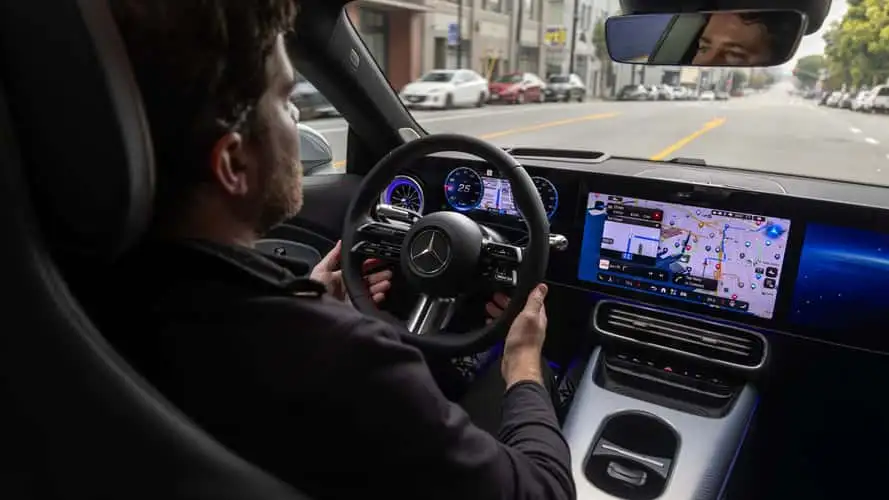
"Eyes off" is hard
Mercedes paused Drive Pilot, the only Level 3 system sold for personal cars in the U.S. It only worked on certain highways, up to 40 mph, in daylight and good weather.
InsideEVs, January 2026Seeing the Road
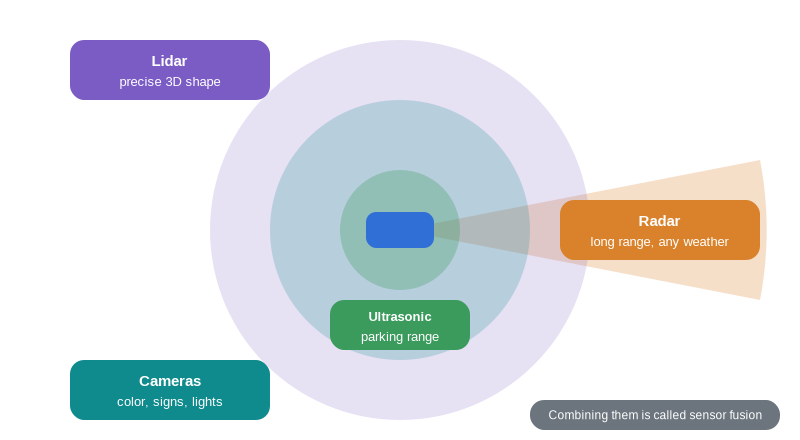
No single sensor is good at everything. Cameras read signs but struggle in glare and darkness. Radar sees through rain but shows little detail. Lidar measures exact 3D shapes with lasers. Combining them, called sensor fusion, covers each one's weaknesses.
Levels of Automation
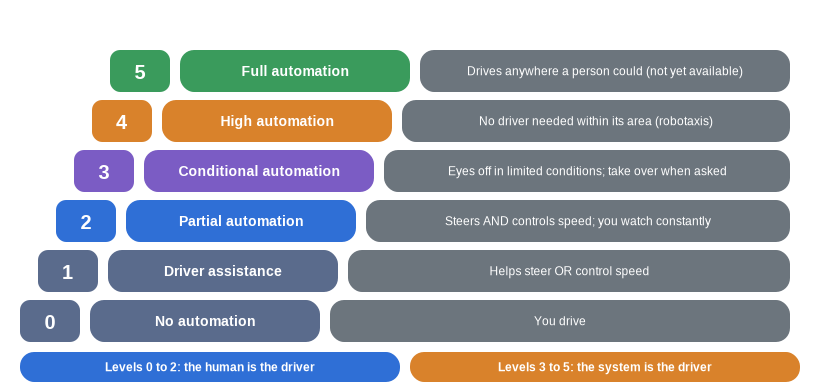
The SAE J3016 standard defines six levels. The key question at each level is who is responsible for driving: the person or the system.
Two Ways to Build the "Brain"
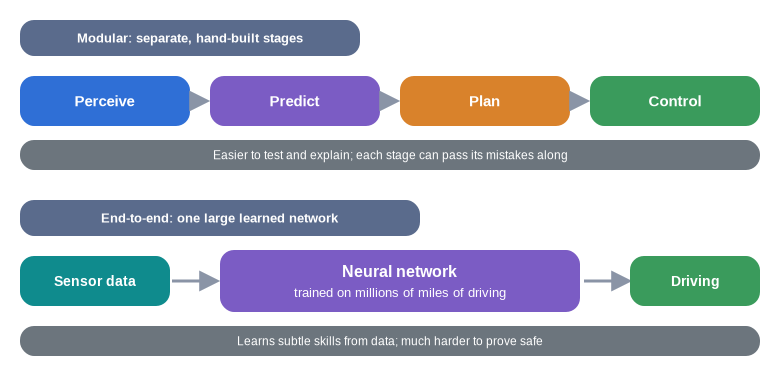
Traditionally, engineers built each step separately. Increasingly, companies train a single large neural network that goes straight from sensor data to driving. This is called end-to-end learning.
How Do We Know It's Safe?
Miles are not enough
Serious crashes are rare, so proving a car is safer than people by driving alone would take hundreds of millions of miles. That is why simulation matters so much.
Comparing with humans
A peer-reviewed study of 56.7 million driverless Waymo miles found significantly fewer injury crashes than human drivers on the same roads.
Learning from incidents
Software recalls, like the one after a robotaxi drove into smoke, show the system can be wrong without anything breaking. See Safety in Cyber-Physical Systems.
Smart Transportation: Beyond the Car
Vehicles can also share information directly with each other and with the road. Vehicle-to-everything (V2X) communication can warn a driver about a car running a red light or a pedestrian in a crosswalk before any sensor could see them.
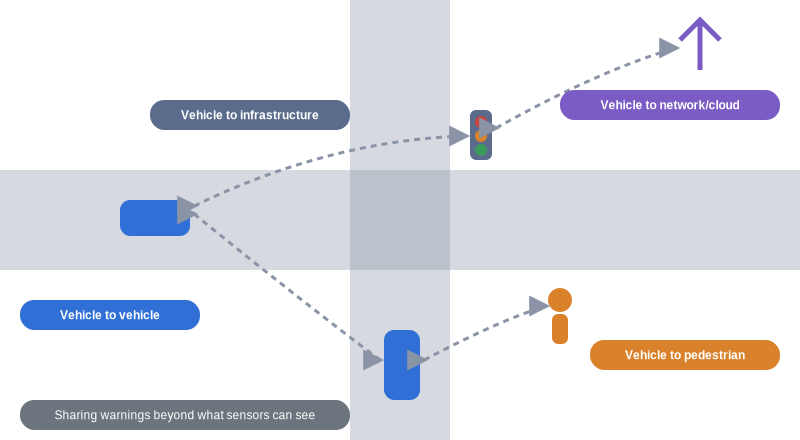
For example, Bellevue, Washington is testing crosswalk buttons that send drivers a "Pedestrian Ahead" alert, from October 2026 to March 2027. (City of Bellevue)
Explore Further
CARLA Simulator
An open-source driving simulator with virtual cities, weather, and sensors, used to test self-driving software.
carla.orgDuckietown
An MIT-born platform for learning autonomy with small robot cars, lectures, and simulation.
duckietown.comAutoware
For developers: the leading open-source self-driving software, built on the Robot Operating System (ROS).
autoware.orgWaymo Open Dataset
For researchers: real driving data with perception, motion, and end-to-end driving challenges.
waymo.com/open