From One-Way Grid to Smart Grid
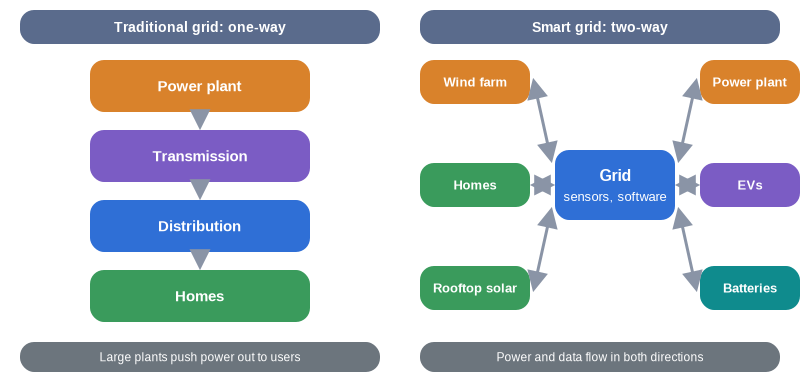
For a century, electricity flowed one way: from large power plants, over transmission lines, to homes and businesses. Today, homes have solar panels and batteries, cars plug in, and wind and solar farms rise and fall with the weather. A smart grid adds sensors, communication, and software so power and information can flow both ways.
The Balancing Act
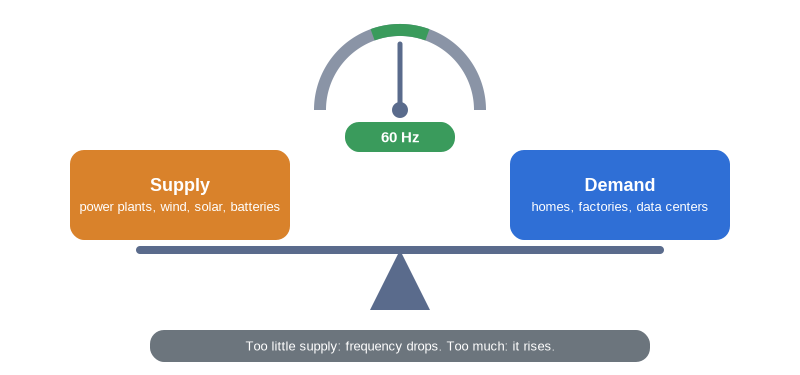
The grid stores very little energy, so the power produced must match the power used every second. The grid's frequency, 60 cycles per second (60 Hz) in North America, is its heartbeat. If demand outruns supply, the frequency drops. If supply outruns demand, it rises. Automatic controls respond within seconds to keep it steady.
The Grid in the News
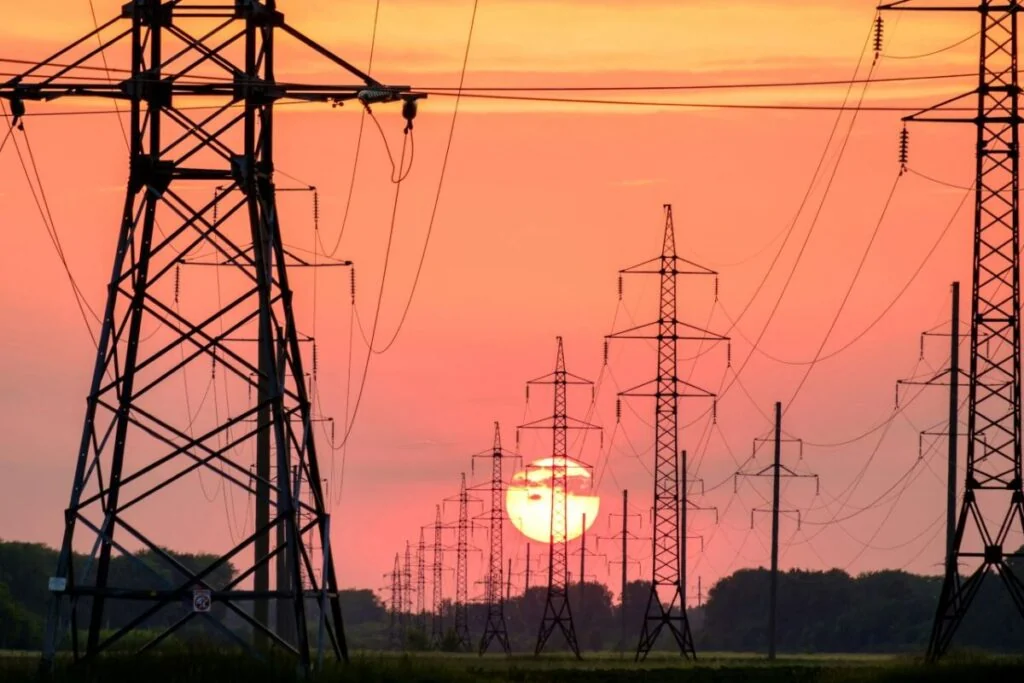
A whole peninsula goes dark
In April 2025, Spain and Portugal lost power. Europe's grid operators found the core problem was voltage control: voltage spiked and power plants shut themselves off in a chain reaction.
PV Tech, March 2026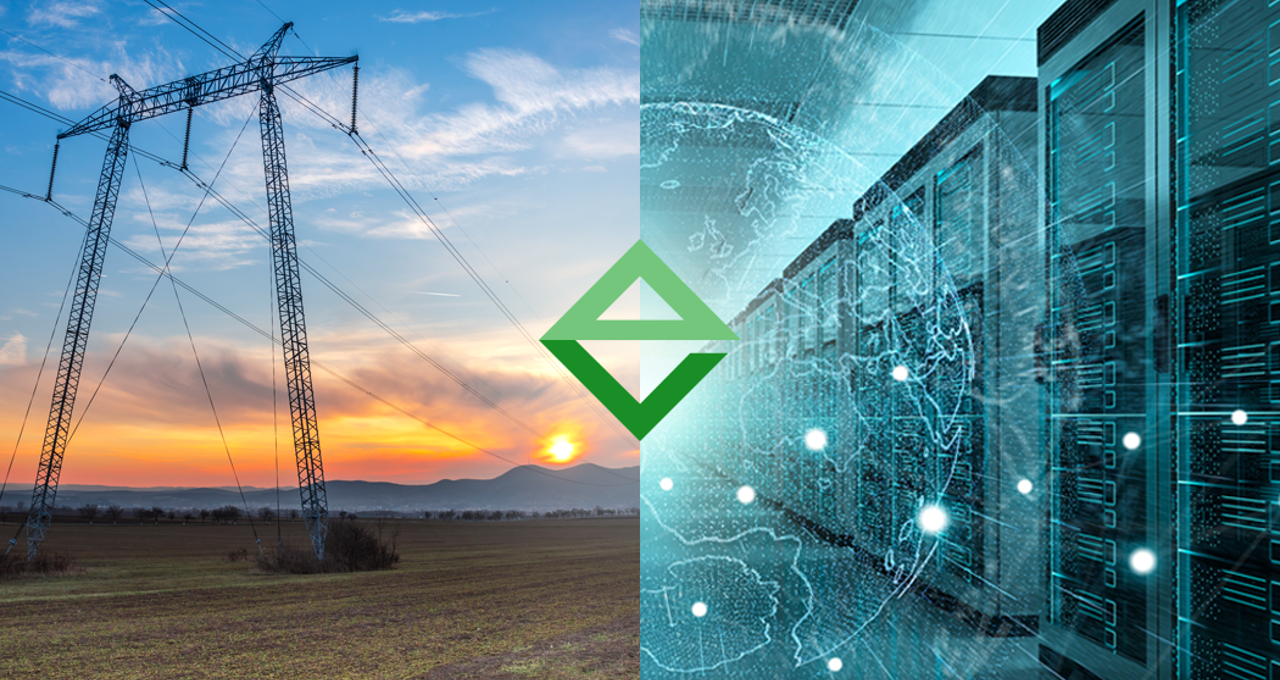
A data center that eases off
In a Phoenix test with utility SRP, Emerald AI's software cut an AI computing cluster's power use 25% for three hours during peak demand, without hurting its work.
NVIDIA, July 2025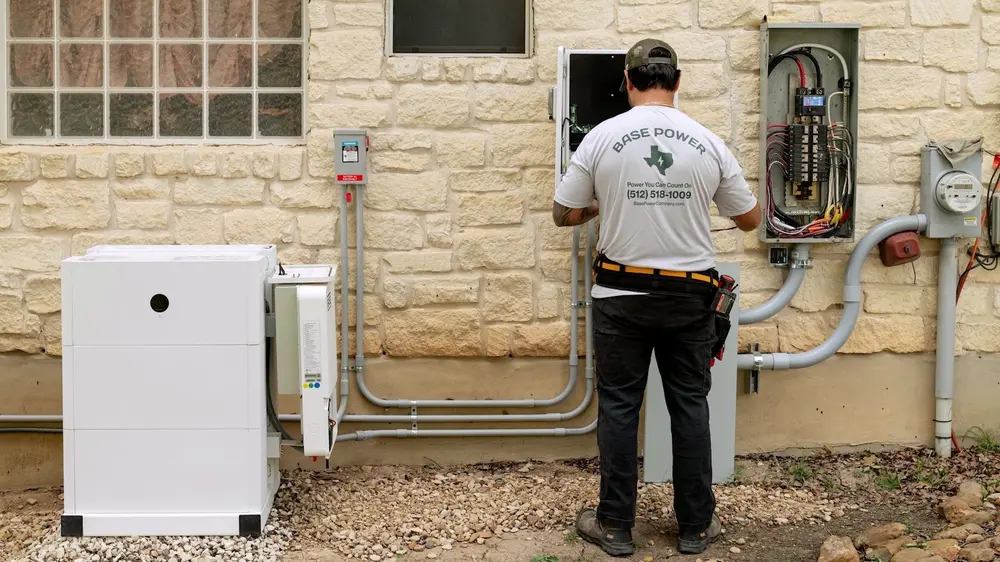
Home batteries join forces
Cheaper batteries are spreading through homes, and utilities in dozens of countries now pool them into virtual power plants to help balance the grid.
Yale Environment 360, July 2026The Solar Challenge: The "Duck Curve"
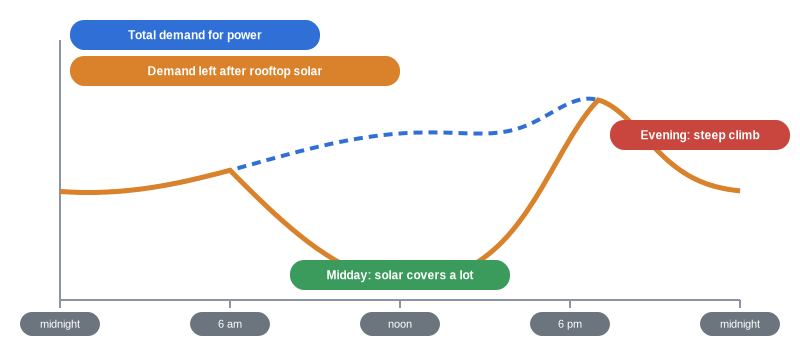
Solar panels produce the most power at midday and none at night. As solar grows, the power the grid must supply from other sources dips at midday and then climbs steeply at sunset, just as people get home. Plotted over a day, the shape looks like a duck.
Virtual Power Plants
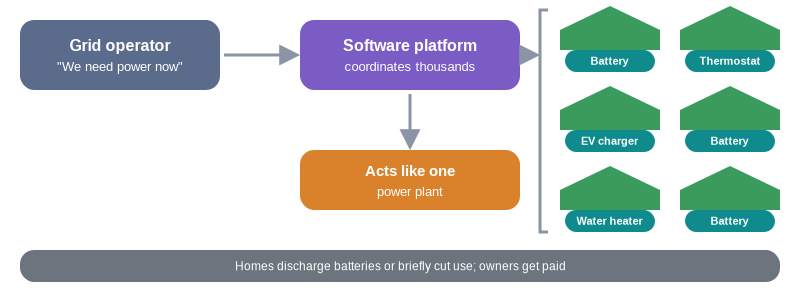
A virtual power plant is software that coordinates thousands of small devices, such as home batteries, smart thermostats, water heaters, and EV chargers, so they act together like one power plant. When the grid is stressed, they release stored energy or briefly use less.
Microgrids: Keeping the Lights On Locally
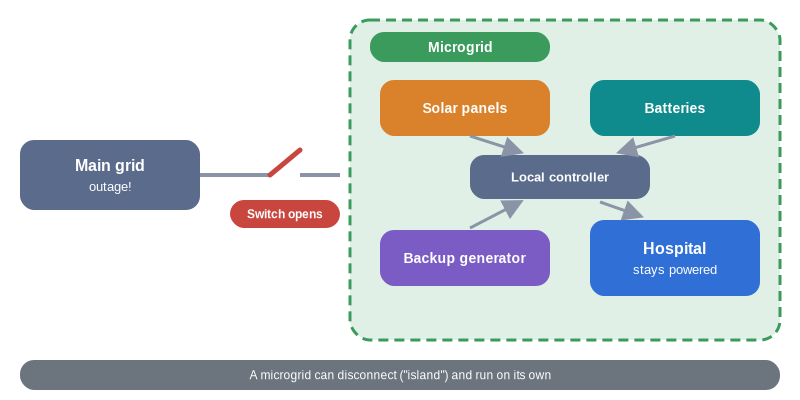
A microgrid is a small local grid, such as a hospital, campus, or military base, with its own power sources and controller. Normally it is connected to the main grid. During an outage it can disconnect and keep running on its own, which is called islanding.
New Capabilities, New Risks
Rising demand
AI data centers, electric vehicles, and heat pumps are adding demand quickly, so flexibility matters more than ever.
Electronics everywhere
Solar panels and batteries connect through inverters controlled by software. Their settings can help steady the grid, or, as in Spain, they may disconnect when they are needed most.
More ways in
Every connected device is a possible target. Attackers hit Polish wind and solar farms in 2025. See Security Challenges.