Why CPS Security Is Different
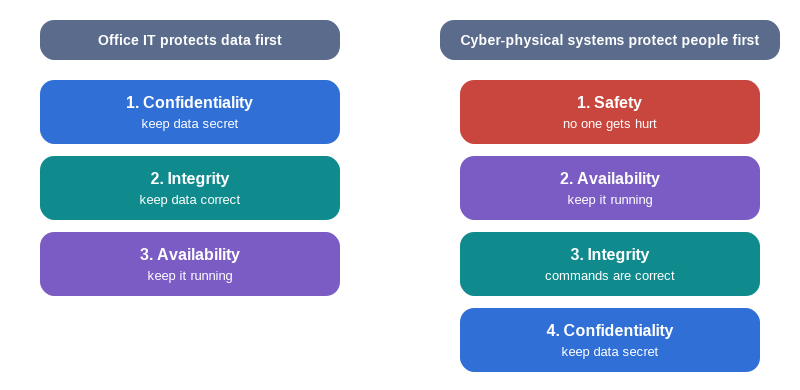
In office computing, a cyberattack usually means stolen or locked data. In a cyber-physical system, it can mean a blackout, a crashed vehicle, or a damaged factory. That changes what defenders protect first.
Physical consequences
Attacks can damage equipment, cut power, or put people in danger.
Old equipment
Industrial devices run for decades and often can't be updated without stopping production.
Trusting protocols
Many industrial networks were designed to accept any message, with no check of who sent it.
Security in the News

An attack on the power grid
In December 2025, attackers used data-wiping malware against more than 30 Polish wind and solar farms and a large power plant. They damaged control equipment at the farms, but the power stayed on.
ESET Research, January 2026
Planes that get "lost"
Jamming drowns out GPS signals. Spoofing is worse: it sends fake signals so an aircraft confidently calculates the wrong position.
RTÉ Brainstorm, April 2026
Hacking cars and chargers, legally
At Pwn2Own Automotive 2026 in Tokyo, researchers broke into Tesla systems, car infotainment units, and EV chargers, revealing dozens of new flaws so makers could fix them.
VicOne, January 2026Attacks don't need to reach the machines to stop them. In 2025, a cyberattack on Jaguar Land Rover's IT systems halted its UK car factories for about five weeks. (Industrial Defender, July 2026)
Where Attackers Get In
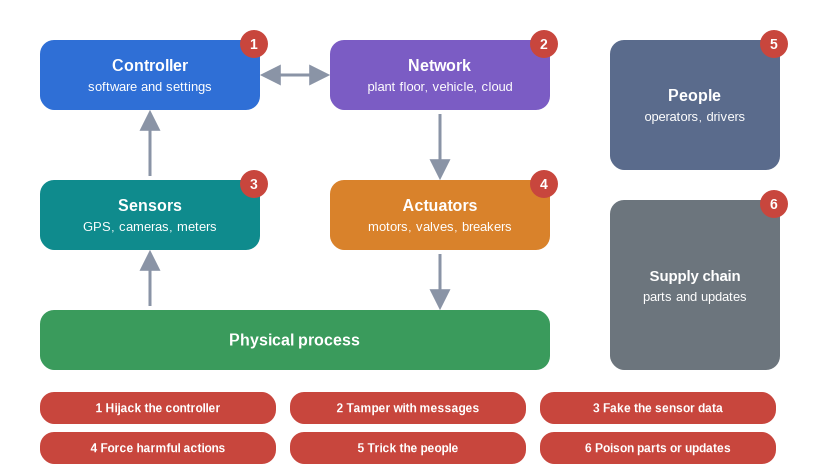
Every part of the loop is a possible way in. Security people call this the attack surface.
The Attack That Changed Everything: Stuxnet
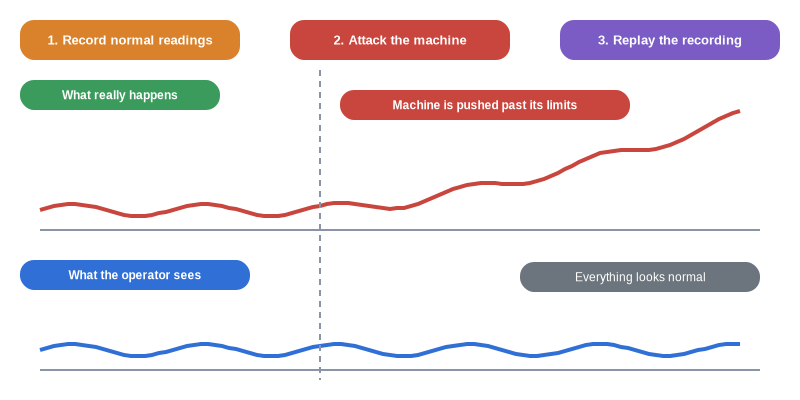
Discovered in 2010, Stuxnet was malicious software built to damage uranium-enrichment centrifuges in Iran. It secretly changed their speed to wear them out. Its cleverest trick was a replay attack: it recorded normal sensor readings and played them back to the operators, so their screens looked fine while the machines were being destroyed.
Building Defenses
Layers of protection
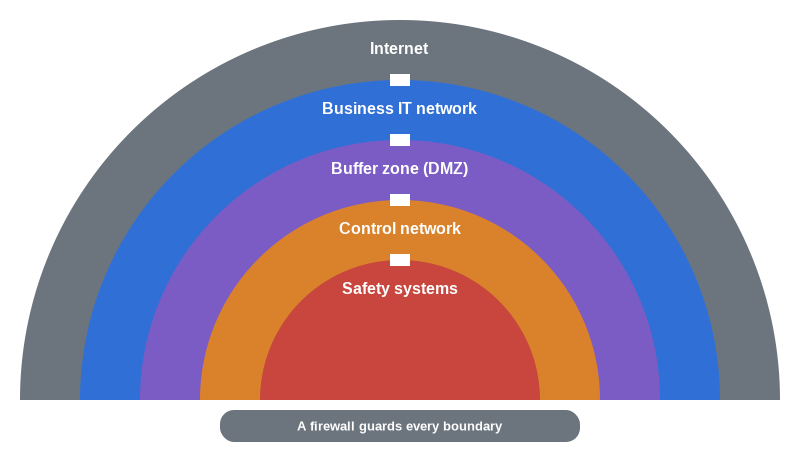
No single defense is perfect, so systems use defense in depth: separate network zones, with the most critical systems deepest inside and a firewall at every boundary.
Trustworthy messages
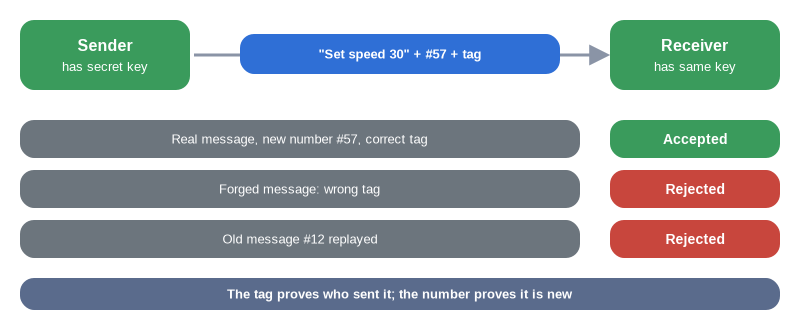
Many machine messages are never checked. A message authentication code fixes that: the sender attaches a tag computed with a secret key, plus a number that is never reused. The receiver can then reject forged messages and recorded old ones.
Using physics to catch attackers
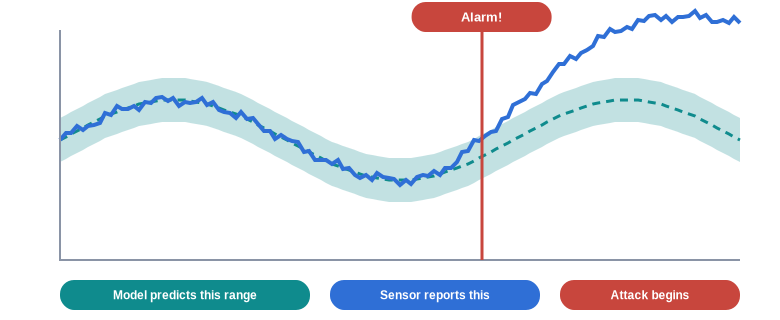
Physical systems obey the laws of physics, so a model can predict what the sensors should report. When readings drift outside that range, something is wrong: a broken sensor or an attack. This is called physics-based anomaly detection.
Key Standards and Frameworks
| NIST SP 800-82 | The U.S. government guide to securing operational technology, such as factories, utilities, and building systems |
| IEC 62443 | The international standard series for industrial automation security, built around network zones and security levels |
| MITRE ATT&CK for ICS | A catalog of real attacker techniques against industrial control systems |
| ISO/SAE 21434 | Cybersecurity engineering for road vehicles |
Explore Further
Cracking Stuxnet (TED talk)
Ralph Langner, who helped decode Stuxnet, explains it in 10 minutes.
ted.comMITRE ATT&CK for ICS
Browse the techniques real attackers use against industrial systems, each with examples.
attack.mitre.orgOpenPLC
An open-source industrial controller you can run on your own computer, a common starting point for building a safe practice lab.
autonomylogic.com